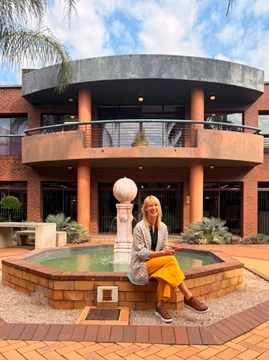
Pictured above: Amber with her IDHA cohort in Pretoria
Earlier this year, I swapped the world’s largest refugee settlement in Bangladesh for a classroom in South Africa. After 18 months working with UNHCR in Cox’s Bazar as a Junior Professional Officer (JPO), this was a chance to step back from the day-to-day pressures of an ongoing emergency response and to reflect on some of the broader issues shaping humanitarian action around the world.
As a JPO, I’m fortunate to receive a training allowance to invest in my professional development, as well as gaining practical experience in the field. Thanks to this generous support from Jersey Overseas Aid, I was able to participate in the International Diploma in Humanitarian Assistance (IDHA) – an intensive four-week residential course in Pretoria, organised by Fordham University.
Many of the topics covered were already familiar to me from my work with UNHCR. We discussed humanitarian principles, displacement, protection, accountability, and the search for durable solutions for people forced to flee their homes. These are concepts I see in action every day in Cox’s Bazar, but the IDHA enabled me to study them in much greater depth and through a more academic lens.
The course brought together a diverse group of participants, all with their own professional goals and reasons for joining. My cohort included lawyers, social workers, NGO staff, government officials, and recent graduates, as well as people with lived experience as refugees – meaning that we tended to approach problems from very different perspectives.
Unsurprisingly, this made group work (a substantial component of the course) challenging at times. We often had competing views and there were plenty of heated debates and disagreements! But looking back, this was a valuable part of the overall experience. The very nature of the international humanitarian sector means working with people from different cultures, organisations, and professional disciplines to solve complex problems, and the course reflected that reality. It pushed us to find common ground and communicate effectively to achieve shared objectives.
For me, one of the main benefits I took from the IDHA was connecting theory with practice. My role in external relations often means switching quickly between priorities. One day I might be helping draft a report explaining the impact of UNHCR’s protection work; the next, leading a visit to the camps from donors whose funding keeps essential services running.
The IDHA gave me time to slow down and explore both the strengths and limitations of the humanitarian system, including the theories and legal frameworks behind it. It also gave me greater insight into areas that I don’t engage with directly in my role, helping me better understand the many different functions required to support a large-scale operation like that in Cox’s Bazar.
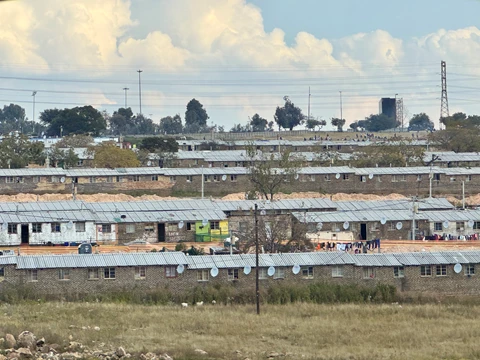
Beyond the classroom, South Africa itself – which continues to top global inequality rankings – became part of our wider learning experience. It was impossible not to notice the stark contrasts between neighbourhoods, with extreme poverty sitting alongside significant wealth.
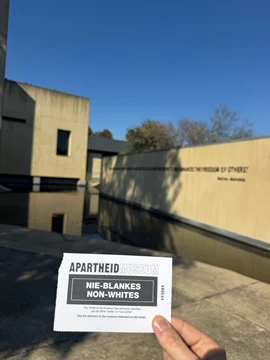
My cohort met with local organisations supporting marginalised communities in Pretoria and visited one of the sprawling townships in nearby Johannesburg. We heard how the legacy of apartheid continues to impact people’s opportunities and outcomes more than three decades on.
I returned to Cox’s Bazar with a fresh sense of motivation and a new appreciation for the work of UNHCR. But many of the issues my IDHA cohort had debated in the classroom were waiting exactly as I had left them.
In Bangladesh, humanitarian organisations are being forced to make difficult decisions about how to support refugees with reduced resources.
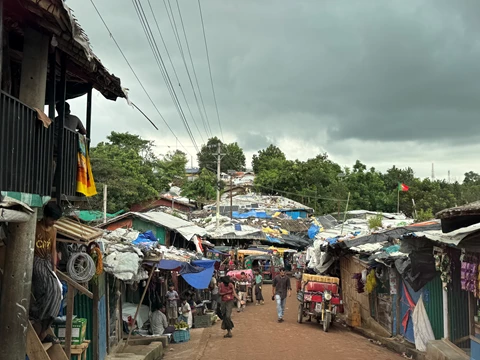
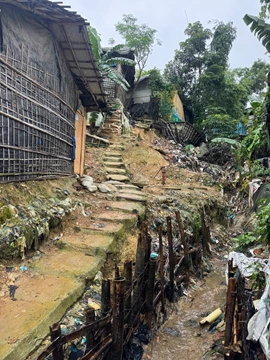
At the same time, life in the camps remains incredibly tough. During the dry season at the start of the year, once again fires damaged or destroyed numerous homes. And more recently, monsoon rains brought flooding and disruption, including a landslide that tragically killed a group of young students at a religious school.
25 August marked nine years since the start of the Rohingya genocide, when hundreds of thousands of people fled Myanmar to desperately seek refuge in Bangladesh. Yet today, a lasting solution remains out of reach.
During the IDHA, we’d discussed ‘forgotten crises’: large-scale humanitarian emergencies that the world has stopped paying attention to. It came as little surprise that the Rohingya were mentioned repeatedly throughout the course.
The headlines may have moved on, but for refugees in Bangladesh the challenges haven’t gone away. Many Rohingya families here are almost entirely dependent on humanitarian assistance for food, shelter, healthcare, education – and overall survival.
Although Bangladesh is thousands of miles from Jersey, the island’s ongoing generosity and commitment to international aid and development is making a real difference to some of the world’s most vulnerable people. I am always proud when I see Jersey Overseas Aid’s logo displayed on banners in the Rohingya refugee camps.
At a time when humanitarian needs remain high and funding is increasingly under pressure, this support matters more than ever.
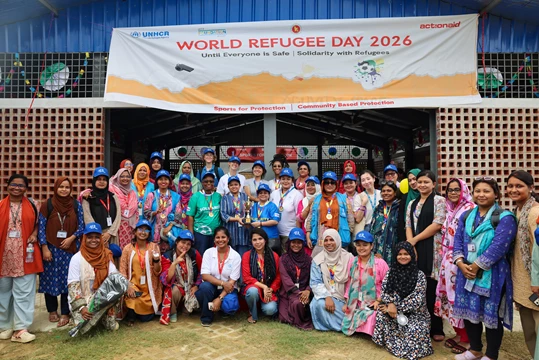
Pictures below from left to right: Amber in the University of Pretoria's campus, Soweto township in Johannesburg, a ticket to the Apartheid Museum in Johannesburg, rainy season in the Cox's Bazar camps, an example of the landslide risk in Cox's Bazar camps, and women's sports activities for World Refugee Day in Cox's Bazar.