Project aims
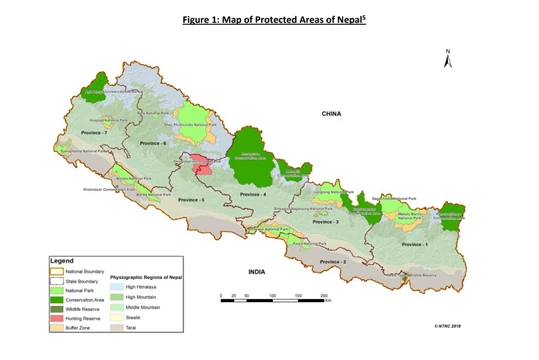
This project aimed to establish a virtuous cycle of human development to enable local communities to conserve forests, reduce indoor air pollution and enhance local livelihood opportunities for 14,000 rural households across 6 municipalities in Karnali and Sudur Pachhim Provinces.
What was the problem the project set out to address?
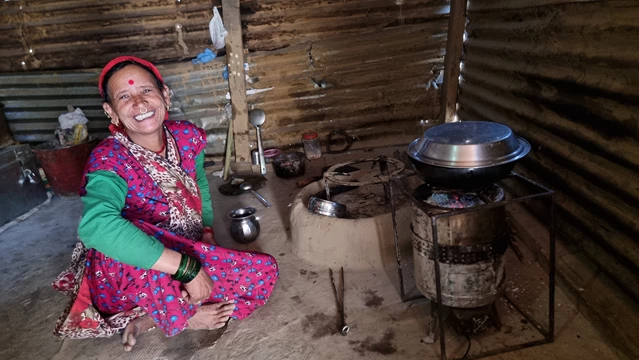
Poor energy efficiency of cookstoves has steadily increased demand and use of fuelwood leading to accelerated deforestation, especially in Karnali and Sudur Pachhim Provinces, which have witnessed some of the highest levels of deforestation across Nepal. In addition to exacerbating forest degradation, the use of fuelwood in traditional cookstoves also has a detrimental impact on health, especially for women and children under five years who are exposed to indoor air pollution from these low efficiency cookstoves for several hours a day. Collection of fuelwood also presents several child protection challenges, disproportionately so for young girls, who are often responsible for sourcing fuelwood in the forests surrounding rural communities.
What did the project do to address this?
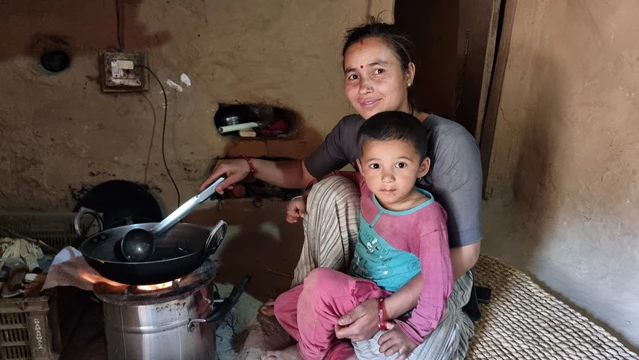
Over the course of 3.5 years, the project set out to reduce deforestation and indoor air pollution by providing 11,000 households, particularly women and children, with clean cooking solutions in the form of eco-cookstoves. These stoves are designed to replace inefficient and traditional cooking stoves, reducing the smoke generated, thus decreasing health risks, especially for women and children who spend more time near the stoves, due to the family role distribution in the communities.
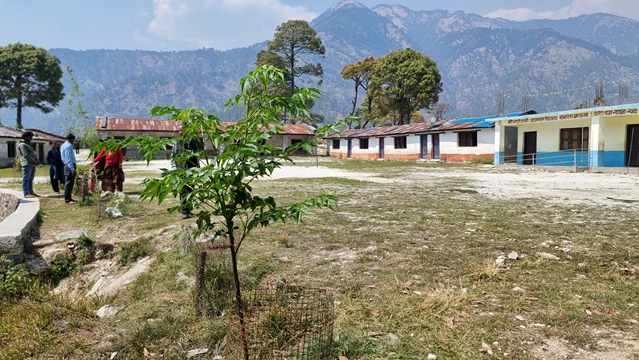
In addition to distributing eco-cookstoves, the project facilitated afforestation and educational activities with schools and health facilities to engage communities and promote environmental and climate change awareness among children, communities, and health workers. By building capacity at the household, school, health facility, and community-level, the project has improved health outcomes, enhanced household nutrition, raised awareness of environmental hazards, and encouraged community engagement in disaster risk management.
-
Behaviour change
-
Encouraging the adoption of new technologies is a time-consuming and challenging process, requiring complimentary layers of awareness-raising of the health impacts of traditional stoves, engagement to promote demand for clean cooking solutions, as well as support for ongoing supply, repair and maintenance.
-
The Eco-Zone project has played a key role in empowering local communities, particularly women and children, by fostering awareness of climate change, forest conservation, and clean energy practices, but continued sensitisation to these issues will be vital in bringing about change at scale.
-
Realisation of the benefits of carbon trading
-
Several factors contributed to delays in the operationalisation of the carbon trading process, utilising the reduction in carbon emissions produced by project participants cooking to generate carbon revenue. This represents an additional benefit of the distribution of eco-cookstoves that will take time to set up owing to the lack of existing carbon trading policy and processes, and is yet to be fully realised.*
-
Following on from the gradual handover of the carbon trading process to Nepali government Institution AEPC and the local Project Steering Committee (PSC), UNICEF will continue to collaborate with these entities to ensure revenue generated reaches the local government and becomes another incentive for the continued allocation of resources to promote clean cooking in these communities.
-
Conclusion
-
Independent external evaluation found that 'widespread adoption of Improved Cooking Stoves (ICSs) has been particularly impactful, bringing significant health and environmental benefits. These include reduced firewood consumption, improved indoor air quality, better health outcomes, and increased time savings, all contributing to enhanced livelihoods for rural households.'
-
The immediate benefits to the recipients of awareness-training and eco-cookstoves are evident, in lived experience of health outcomes, to the increased time household members have as a result of becoming less reliant on firewood collection.
-
Many of the project's capacity-building targets have been well overachieved, resulting in an increased scale of sensitisation to the importance of what may seem like a small change to make to one daily task, but which may go on to support the continued adoption of clean energy solutions in the project communities.
-
“There were nights we went to bed hungry because we couldn’t gather enough firewood...Now, with this improved stove, we have food, and our children can go to school on time. Now, 3 to 4 bundles of firewood per month are sufficient. It has truly transformed our lives.” Gauri B.K., Khadachakra Municipality, Kalikot District
*Update: 2 years on
Two years after the project’s completion, progress continues towards establishing a sustainable carbon financing mechanism linked to clean cooking and forest conservation in Nepal. Building on work initiated during the grant period, the Eco-Zone initiative has become the first project in Nepal to be registered in the National Carbon Registry and approved by the Government of Nepal under the Carbon Trade Regulation. It has also received validation approval from the VERRA Registry, confirming that the project meets the requirements for generating verified carbon credits.
Attention is now focused on the next stages of the carbon credit process. Independent verification of stove usage and performance is underway, with findings expected to support the issuance of carbon credits, followed by engagement with potential buyers and carbon trading. Work is also continuing with local governments to help embed the initiative within ongoing planning processes, supporting the long-term operation and maintenance of improved cookstoves and helping to ensure that future carbon revenues can benefit local communities.
These milestones illustrate how the project’s early investments have continued to create opportunities beyond the original grant period, laying the groundwork for longer-term financing of clean energy and conservation activities.
Updated 10 July 2026