Above: CLIMB citizen scientists collect data on water quality


Conserving Forests Through Strengthening Livelihoods in Malawi's Biosphere Reserves
The Conservation Livelihoods in Malawi's Biospheres (CLIMB) project worked with rural communities surrounding the Mulanje Mountain Forest Reserve as well as the Viphya and Mtangatanga Forest Reserves. It demonstrated how environmental conservation and poverty reduction can go hand in hand; the project improved resilience for thousands of vulnerable households while strengthening protection of some of Malawi's most important forest landscapes.
06 August 2026
| Moses Sappé
-
Location
Malawi - Mulanje and Mzimba Districts
-
- Project title
- CLIMB - Conservation Livelihoods In Malawi's Biospheres
- Project partner
- Plan International
- Implementation partners (NGOs)
- Mulanje Mountain Conservation Trust, Total LandCare, and Earthwatch Europe
- Implementation partners (Malawi Government)
- Department of Forestry and Department of Agricultural Extension Services
- Implementation period
- 2022 - 2026
- Total project budget
- £1,200,000
What was the problem the project set out to address?
Communities living around Malawi's forest reserves face a combination of poverty, food insecurity, environmental degradation, and increasing climate risks. Many households depend directly on forests for fuel, income, and agricultural land, creating pressure on already fragile ecosystems. Climate shocks, including cyclones, droughts, and erratic rainfall, have further reduced agricultural productivity and increased vulnerability among rural communities. Simultaneously, limited economic opportunities and weak local governance structures have often constrained efforts to protect forests and biodiversity.
Project aims
The project aimed to reduce poverty and strengthen biodiversity conservation by supporting communities living around vulnerable forest ecosystems. It sought to reduce reliance on unsustainable forest use by improving livelihoods, strengthening community governance, restoring degraded landscapes, and increasing local participation in environmental management and monitoring. The three areas of intervention within the forest ecosystem, or 'zones', that the project focused on were:
- The core zone – protected areas of the ecosystem (forest).
- The buffer zone – the outskirts of the forest where resources, such as timber, are gathered.
- The transition zone – the populated area around the forest.
What did the project do to address this?
To list some examples of initiatives from each of the aforementioned zones:
- In the core zone, community forest governance were improved by supporting 93 Village Natural Resource Management Committees, placing 8,857 hectares of forest under protection. Additionally, more than 12,441 hectares of forest were brought into recovery through community-led regeneration.
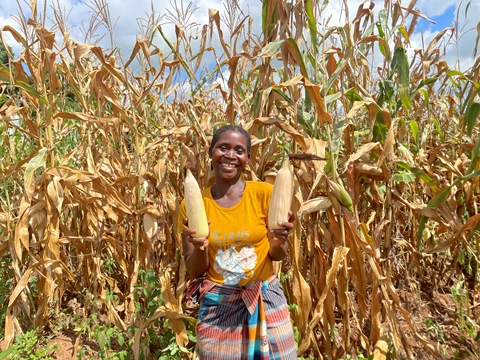
- In the buffer zone, livelihood diversification was supported through irrigation, beekeeping, livestock, and high-value crops, increasing the number of households with multiple income sources from 1,399 to 3,882. Additionally, climate-smart agriculture was promoted, with 6,658 households adopting conservation agriculture practices and 4,455 households using climate-resilient seeds and inputs.
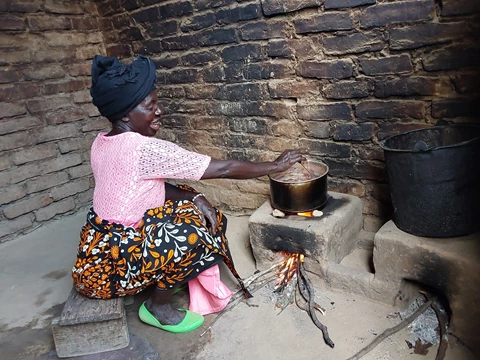
- In the transition zone, demand for fuelwood was reduced by supporting the adoption of 3,794 fuel-efficient cookstoves, helping save an estimated 24,280 trees each year. To complement the other initiatives undertaken within this zone, financial inclusion was strengthened through increasing membership of Village Savings and Loan Associations (VSLAs), with most participants reporting reduced reliance on forest-based income.
- Across all three zones, a citizen science programme was introduced that trained 390 community members to monitor water quality, soil health, and forest conditions, generating data that can support government environmental monitoring and SDG reporting.
Overall impact: By combining conservation with practical livelihood support, both environmental resilience and rural wellbeing were increased.
Case Study: Veronica's Story
In Mzimba District, Veronica [pictured below], a mother of three, once relied entirely on her husband's income and struggled to contribute financially to her household. Everything changed when she joined a VSLA supported through the CLIMB project, where she received training in financial literacy, savings, and business management.
Using a small loan from the group, Veronica purchased farming inputs that improved her harvest and later opened a grocery shop near her home. She now earns around MK4,000 per day, enabling her to buy food, pay school fees, save for emergencies, and invest in goat farming, with plans to expand further.
The VSLA has also helped Veronica move away from environmentally harmful activities such as charcoal production and adopt more sustainable practices, including using a fuel-efficient rocket stove. Reflecting on the impact of the project, she said:
"Now, I make a profit of MK 4,000 a day and I am able to buy food, pay school fees, and even save for emergencies. I feel confident, and I don't wait for my husband to provide everything anymore."
-
Lessons learned
-
1. Integrated Approaches Deliver Stronger Results
Combining livelihoods, conservation, governance, and knowledge systems proved more effective than tackling these issues separately. The project showed that communities are better able to protect natural resources when they also have sustainable income opportunities and stronger local institutions.
-
2. Local Leadership Drives Sustainable Change
Village Natural Resource Management Committees, lead farmers, community patrols, and citizen scientists were central to the project's success. Investing in community ownership created stronger stewardship and increased the likelihood that benefits will continue beyond the life of the project.
-
3. Financial Inclusion Builds Resilience
Village Savings and Loan Associations helped households diversify incomes, invest in businesses and farming, and reduce dependence on forest-based coping strategies. The project demonstrated that financial inclusion can be a powerful conservation and resilience tool.
-
4. Citizen Science Creates Lasting Impact
Community-based monitoring strengthened environmental awareness while generating valuable data for local and national decision-making. The success of the citizen science approach highlighted its potential for wider adoption and integration into government systems.
-
Conclusion
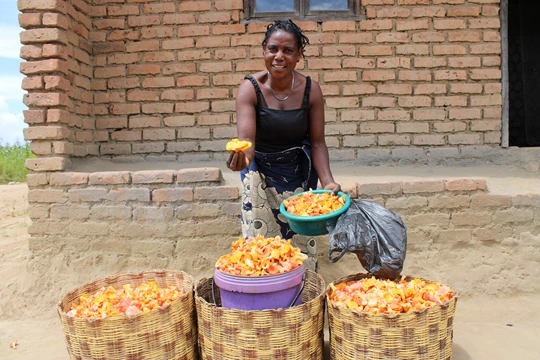
CLIMB demonstrates that conservation outcomes are strongest when environmental protection is linked directly to improved livelihoods and community empowerment. Through investments in agriculture, financial inclusion, forest governance, ecological restoration, and citizen science, the project helped communities strengthen their resilience while reducing pressure on critical forest ecosystems. The project leaves behind stronger local institutions, improved community stewardship of natural resources, and a scalable model for delivering conservation, climate resilience, and poverty reduction together. The image carousel below shows further images taken during the project's implementation.
Image 1: CLIMB project participant with yield using drought resistant seeds
Image 2: CLIMB participant using an improved cookstone
Image 3: CLIMB participant with non-timber forest products
Sign up to our newsletter
Find out more about JOA, the work we do, forthcoming events and volunteering opportunities.