
Earth Day is a moment to reflect on our shared responsibility to protect the planet and recognise the vital connection between healthy ecosystems, resilient livelihoods and thriving communities.
Conservation Livelihoods in action: Nepal
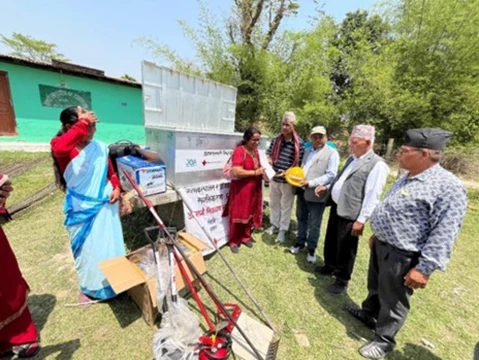
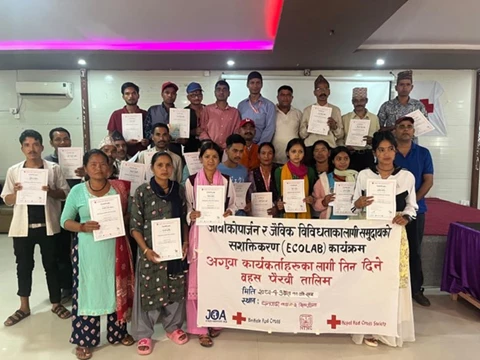
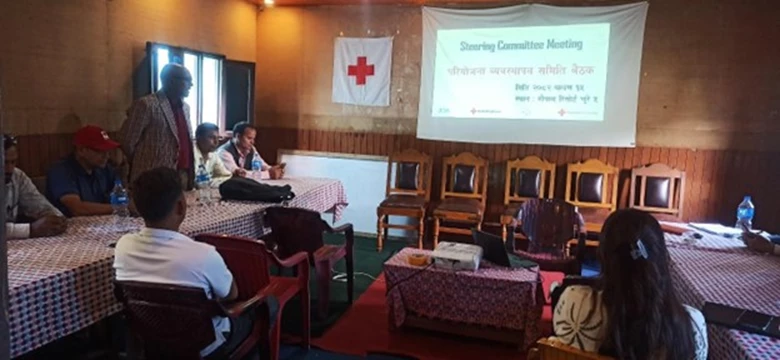
One example that reflects this approach is our support to community‑led conservation initiatives in Nepal, delivered by the British Red Cross and Nepal Red Cross Society in partnership with local authorities: Empowering Communities for Livelihoods and Biodiversity (ECOLAB).
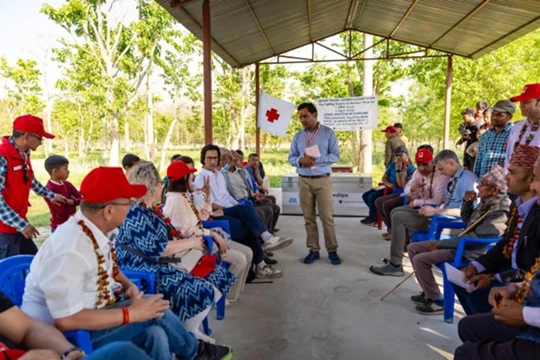
In Dhangadhi Sub‑Metropolitan City, Raptauna Lake has long been central to community life, providing water for irrigation, fishing, livestock and household use. Over time, environmental degradation and unmanaged water flows transformed the lake into a source of risk rather than benefit damaging crops, increasing flooding and undermining livelihoods.
Through close collaboration between communities, municipalities and the project team, the lake has been restored using nature‑based solutions. Local materials were used to reinforce the lake structure, water flows were safely managed, and the site was clearly demarcated to protect it for future use.
Today, Raptauna Lake once again supports year‑round farming, feeds soil health, and provides a reliable water source during periods of scarcity and emergency. Plans are also underway to introduce fish farming, opening up new livelihood opportunities for local families. The restoration shows what is possible when communities are engaged with training and support, and empowered as partners and stewards of their environment and natural resources.
Women as stewards of nature
At the core of these initiatives are local leaders, particularly women who are playing an increasingly prominent role in conservation and natural resource management.
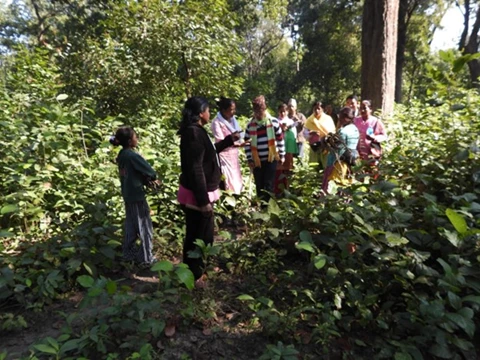
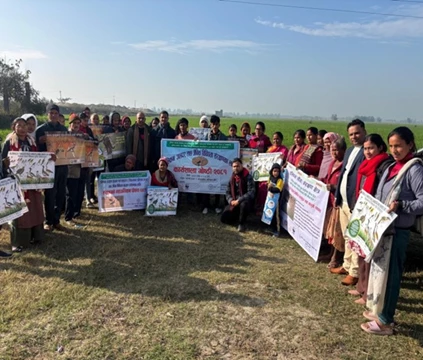
In Shibir Tole, Seema Chaudhary is one of many community members who have stepped into leadership roles through Community‑Based Anti‑Poaching Units. After receiving training and support, Seema now takes part in regular patrols to discourage illegal fishing, tree cutting and unsustainable use of forest resources.
“We counsel people when we see harmful practices... Earlier, people dumped plastic here. Now, this place has completely changed. If communities are aware, change is possible.”
Seema Chaudhary
These activities go beyond enforcement. Community members like Seema share knowledge, raise environmental awareness and pass conservation values on to their children, connecting daily livelihoods with long‑term stewardship of nature. Her story highlights how conservation initiatives can strengthen confidence, leadership and social inclusion alongside environmental protection.
Nature-based solutions for climate resilience
Elsewhere in Godawari Municipality, communities facing severe soil erosion and flood risk during monsoon seasons have turned to simple, low‑cost solutions that work with nature rather than against it.
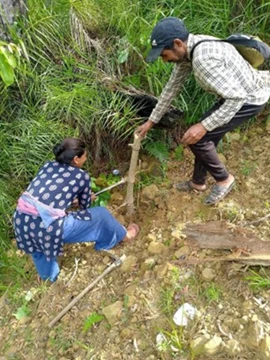
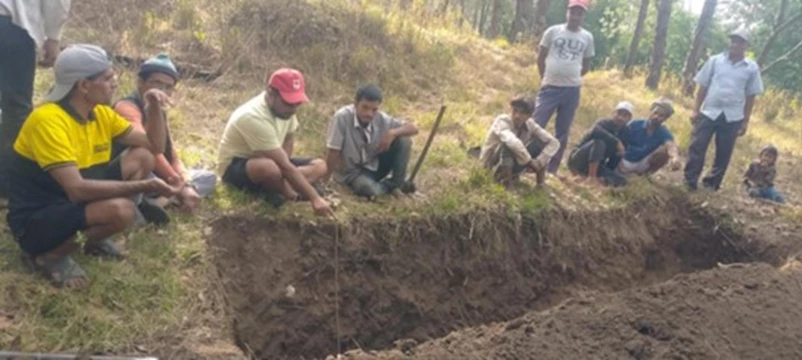
By planting vetiver grass along erosion‑prone slopes near the Godawari River, communities have stabilised land, reduced runoff and protected fertile soil. What was once a recurring source of fear each monsoon season has become a story of resilience demonstrating how nature‑based solutions can safeguard livelihoods while restoring degraded landscapes.
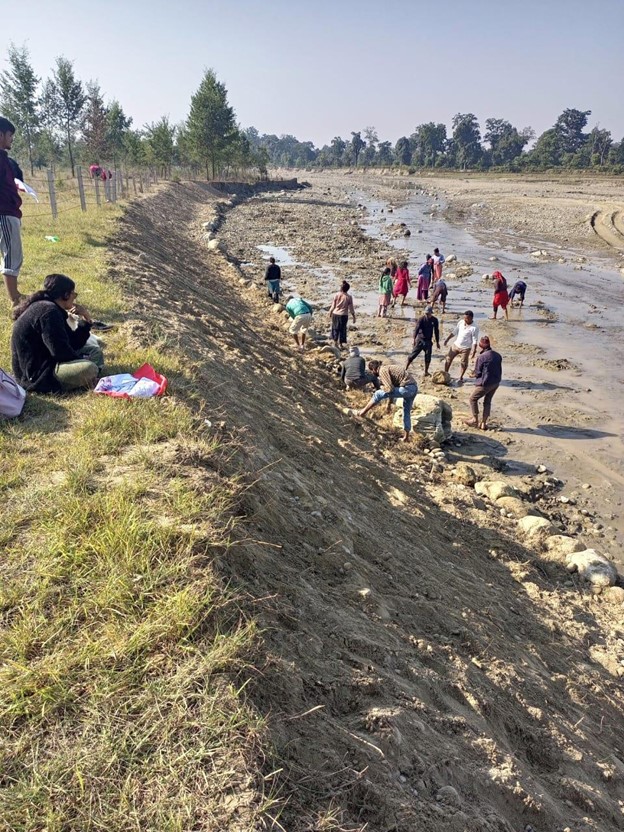
Community members engaged in preparing slopes for Vetiver plantation. Credit: British Red Cross / Nepal Red Cross Society.
Looking ahead
These stories reflect the purpose of Earth Day 2026, that environmental protection is most effective when driven by people, rooted in local knowledge and linked directly to livelihoods. When communities are empowered to manage their natural resources sustainably, the benefits are shared; healthier ecosystems, stronger livelihoods and increased resilience to climate change.
JOA remains committed to supporting locally-led Conservation Livelihoods, ensuring that environmental protection and poverty reduction move forward together, so that people and the planet can thrive, now and for future generations.